


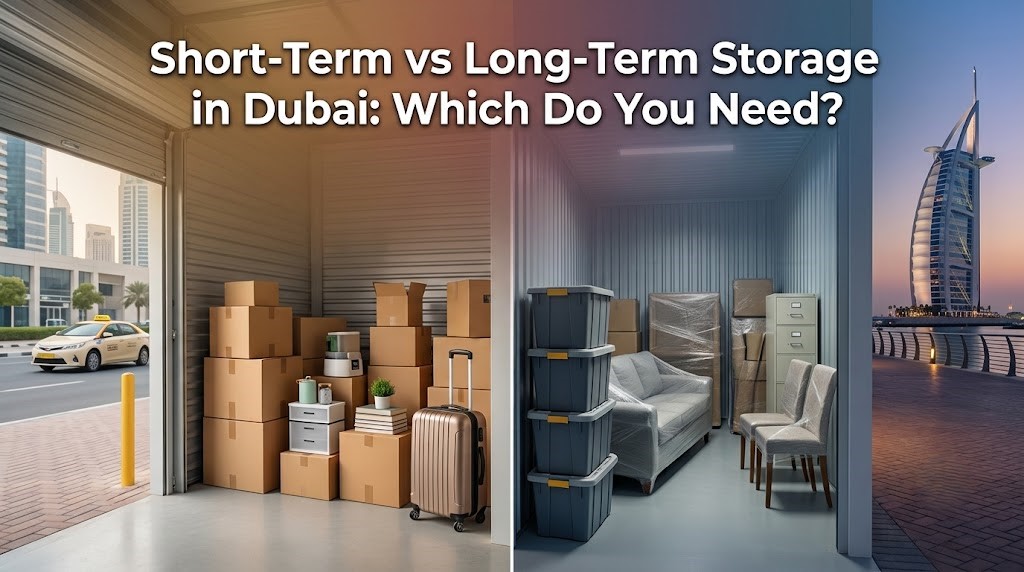
Dubai’s population crossed 3.7 million in 2026 and keeps growing at roughly 10.7% a year, with expats making up close to 90% of residents. That fact alone explains most of the storage demand in this city better than a sales page ever could. People here move constantly, between apartments, between countries, between jobs, and every one of those moves creates a gap where belongings need somewhere safe to sit for a while.
That gap can be four days or four years. The Dubai Land Department’s Smart Rental Index and Rental Heatmap, rolled out through 2026, have made lease terms and renewal timing more transparent than they used to be, but they haven’t changed the underlying pattern: tenants still shift addresses when contracts end, villas still get renovated mid-lease, and families still relocate abroad on short notice. Pick the wrong storage term for your situation and you either overpay or end up with less protection than you needed.
This guide breaks down what actually separates short-term from long-term storage in Dubai, what each one costs, and how to work out which one applies to your move.
Why Storage Decisions Look Different in Dubai
In a lot of cities, storage is something people use occasionally, mostly during a house move. In Dubai it’s closer to a recurring feature of city life. Bayut’s H1 2026 rental market report found that residential demand stayed strong across affordable, mid-tier, luxury, and ultra-luxury segments, with rents becoming more moderate rather than falling. In practice that means tenants keep testing the market and switching buildings whenever a better deal shows up.
Add a housing supply that’s expanding fast (Dubai’s 2040 Urban Master Plan targets a population of 5.8 million) to a workforce that runs largely on renewable employment visas, and you get a city where “temporary” moves are the norm rather than the exception. Villa renovations, DEWA disconnections tied to move-out dates, and end-of-contract relocations all create short windows where storage is the practical answer. Longer postings abroad, business inventory, and seasonal furniture make up the other half of the market.
What Counts as Short-Term Storage in Dubai
Short-term storage generally covers anything from a few days up to about six months. It suits situations with a clear, near-term end date:
- Bridging the gap between move-out and move-in when your new place isn’t ready
- Storing furniture during a villa renovation
- Holding belongings while you’re waiting on a visa renewal or a new Emirates ID
- Covering a short posting abroad before you’re back in Dubai
Most providers price short-term storage by the week or month instead of locking you into a long contract, and that flexibility is really what you’re paying for. The premium isn’t for the storage itself so much as for the ability to walk away with two weeks’ notice.
What Counts as Long-Term Storage in Dubai
Long-term storage usually starts around the six-month mark and can run for years. It fits a different set of situations:
- Relocating internationally and keeping a smaller set of belongings in Dubai for an eventual return
- Businesses storing stock, documents, or equipment they don’t need daily but have to retain
- Households that split the year between Dubai and elsewhere and store furniture seasonally
- Downsizing into a smaller home without wanting to part with everything at once
Monthly rates here tend to run lower than short-term pricing, since the provider isn’t reconfiguring the space as often. In exchange, you commit to a longer minimum term, and breaking that contract early usually carries a fee.
Short-Term vs Long-Term Storage in Dubai: Side by Side
| Factor | Short-Term Storage | Long-Term Storage |
|---|---|---|
| Typical duration | Days to 6 months | 6 months to several years |
| Common use case | Moving gap, renovation, short posting | Relocation abroad, business inventory, seasonal storage |
| Pricing structure | Weekly or monthly, higher per-unit rate | Monthly, with long-term discount |
| Contract flexibility | High, short notice to end | Lower, minimum term applies |
| Access frequency | Often needed regularly | Usually infrequent |
| Best for | Individuals mid-move | Businesses, expats abroad, seasonal use |
Cost Differences Between Short-Term and Long-Term Storage
Storage pricing in Dubai is usually quoted per square metre or per unit size, and the market has become more transparent through 2026 as more providers publish rates online instead of requiring a phone call for every quote. Short-term storage carries a per-month premium because providers need to keep units free for frequent turnover. Long-term storage typically comes with a discounted monthly rate once you commit past six months, and some providers waive deposits or throw in a free first month to secure longer contracts.
The other variable is what you’re storing. Furniture and household goods typically go into standard units. Sensitive items like wooden furniture, electronics, and artwork need climate-controlled storage, which costs more regardless of term length. If you’re storing business inventory or documents, warehouse-style storage with pallet access usually sits in a separate pricing tier from personal self-storage.
What to Check Before You Book Storage in Dubai
A few things matter more than the headline price.
Security certification. Look for CCTV coverage, fire alarm systems, and ideally Dubai Police-approved monitoring. This isn’t optional in a climate where heat and humidity can damage stored goods if a facility isn’t properly maintained.
Climate control. A Dubai summer pushes warehouse temperatures well past what’s safe for wood, leather, and electronics. If you’re storing anything beyond boxed clothing and hard plastic items, confirm the unit is genuinely climate-controlled and not just covered.
Access terms. Some short-term units allow 24/7 access; others require booking a visit in advance. If you’ll need to retrieve items mid-storage, confirm this before signing anything.
Exit terms. Ask specifically what happens if you need to end a long-term contract early, or extend a short-term one. This is the detail most people skip and end up regretting later.
How Sparkle Relocations Handles Storage
At Sparkle Relocations, storage is built into the relocation process rather than sold as a separate add-on. Units come with CCTV coverage and fire alarm systems as standard, and the team can move items directly from your local move or international relocation into storage without a separate handover. That matters most in the exact situations this guide covers: a renovation, a lease gap, or a posting abroad, where the last thing you want is to coordinate two different companies for one move.
For office relocations, the same storage facility handles business inventory and equipment on longer contracts, with transit insurance available to cover items while they’re in transit between your old space, storage, and the new one. If your storage need is tied to a bigger cross-border move, it’s worth reading how a local move differs from an international one before you commit to a term.
Which One Do You Actually Need?
If you have a fixed, near-term end date (you’re waiting on a new lease, mid-renovation, or covering a short posting), short-term storage is the right call even though the per-month rate is higher. Paying slightly more for the flexibility to end the contract on short notice usually works out cheaper than locking into a long-term rate you don’t actually need.
If you’re relocating abroad indefinitely, running a business that needs ongoing inventory space, or storing seasonal items you’ll retrieve once or twice a year, long-term storage makes better financial sense. The lower monthly rate only pays off if you use the full term, so don’t sign a 12-month contract to solve a 3-month problem.
When in doubt, ask the provider whether you can start short-term and convert to a long-term rate later. Most Dubai storage providers, including Sparkle Relocations, can adjust the plan once your actual timeline becomes clearer, and that flexibility is often worth more than getting the term decision exactly right on day one.