


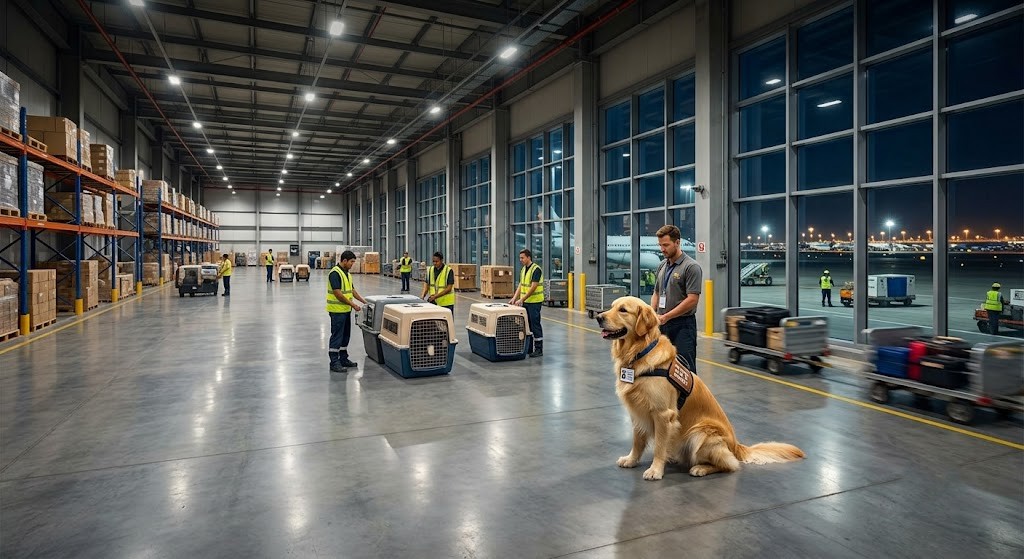
Moving a medium dog into Dubai typically costs somewhere between AED 6,000 and AED 16,000 once you add up the import permit, vaccinations, crate, cargo handling and, in many cases, an agent fee. A cat usually comes in lower, closer to AED 4,000 to AED 9,000, because the airline crate and cargo weight charges scale with size. Neither figure includes quarantine, because a properly documented pet entering through Dubai doesn’t need one. It’s the paperwork that has to be perfect, not the animal.
The rules changed in small but important ways through 2026. The Ministry of Climate Change and Environment, MOCCAE, now issues the mandatory import permit at AED 200 to 500 per animal depending on species and processing speed, valid for a fixed window that most owners find shorter than they expect. Miss that window and the permit has to be reissued, which means restarting part of the paperwork chain rather than just paying a fee again.
This guide walks through every line item in a pet relocation services dubai budget, from the MOCCAE permit through to Dubai Municipality registration once your pet is on the ground, and it’s built around official UAE requirements rather than the generic “shipping a pet abroad” advice that gets recycled across relocation blogs regardless of destination country.
The MOCCAE Import Permit: Where the Process Starts
Every cat or dog entering Dubai needs an import permit from MOCCAE before it travels. No permit, no clearance at the airport, regardless of how complete the rest of the paperwork is.
- Import permit fee: AED 200 to 500 per animal, with the permit valid for a limited window from the date of issue, so book the flight before you apply, not after.
- Maximum pets per person: two per year under standard rules (one of each species, or two of the same), with higher numbers requiring an agent’s help to structure the application correctly.
- Minimum age: 12 weeks for pets from low-risk rabies countries, 15 weeks for pets from high-risk countries.
- Banned breeds: several breeds, including Pit Bulls, Rottweilers, and Dobermans, are refused entry outright, and MOCCAE inspectors assess by appearance as well as by the breed listed on paperwork, so a mixed breed that visually resembles a banned type can be flagged.
The permit application also determines whether your pet needs a rabies titre test. Pets from countries MOCCAE classifies as low-risk generally skip this step; pets from high-risk countries typically need a titre test completed well in advance, since the result has to sit within a required waiting window before travel.
Vet Work, Vaccinations, and the Health Certificate
Before MOCCAE will process anything, your pet needs a documented health history that matches every number across every form exactly, since a mismatched microchip number between the vaccination card and the health certificate is one of the most common reasons a shipment gets held up.
- ISO-compliant microchip: around AED 150, and it has to be implanted before the rabies vaccination is administered, not after.
- Core vaccinations: roughly AED 400 to 600 depending on the pet and how up to date its existing record is.
- Rabies titre test (if required): around AED 700, plus the waiting period before results clear your pet for travel.
- Health certificate and export endorsement: AED 400 to 700, issued by a licensed vet within days of departure and endorsed by the relevant veterinary authority in the country of origin.
None of this is negotiable timing. A rabies titre test that comes back a week late can push your entire departure date, which is the single biggest reason pet relocation costs more when it’s rushed than when it’s planned three to four months out.
Crate, Cargo, and Airline Costs
Pets are not permitted in the cabin or as checked baggage on flights into Dubai. Every animal travels as manifest cargo, which changes both the cost structure and the logistics compared to a straightforward pet-in-cabin flight to most other destinations.
- IATA-compliant travel crate: AED 300 for a small crate, up to AED 1,000 or more for a large dog crate that meets airline sizing rules.
- Cargo transport charge: AED 3,000 to 8,000, scaling with the animal’s size, the airline, and the origin country.
- DXB release and handling fee: roughly AED 250 for a cat, AED 500 to 1,000 for a dog, paid at the cargo terminal on arrival.
- Customs broker or clearing agent: most airlines require one for cargo pet shipments, and this is usually where a dedicated pet relocation service earns its fee, since navigating cargo terminal procedures without local experience tends to cost more time than money saved.
Emirates SkyCargo and Etihad Cargo are the two carriers most commonly used for pet shipments into Dubai, and both have established live-animal handling protocols, but availability and pricing shift by season, so it’s worth booking the cargo slot as early as the visa or shipment planning allows.
What Happens After Landing: Dubai Municipality Registration
Clearing the airport isn’t the final step. Every cat and dog living in Dubai has to be registered annually with Dubai Municipality.
| Cost Item | Typical Amount |
|---|---|
| MOCCAE import permit | AED 200-500 |
| Microchip (if not already done) | AED 150 |
| Vaccinations | AED 400-600 |
| Rabies titre test (if required) | AED 700 |
| Health certificate + endorsement | AED 400-700 |
| IATA crate | AED 300-1,000+ |
| Cargo transport | AED 3,000-8,000 |
| DXB release/handling fee | AED 250-1,000 |
| Dubai Municipality registration | AED 10-200/year |
Registration itself is inexpensive; the fine for skipping it is not. Owners who register late or not at all risk a penalty in the AED 150 to 500 range on top of the registration fee they were avoiding in the first place, so it’s worth doing in the first week rather than putting it off.
Agent Fee vs Doing It Yourself
A full-service pet relocation agent typically charges AED 3,000 to 6,000 on top of the permit, vet, and cargo costs, which sounds like an avoidable expense until you weigh it against what’s actually being managed. The agent coordinates the MOCCAE permit timeline against your flight booking, confirms every document matches down to the microchip number, books the cargo slot with the airline, and handles the pickup at the DXB cargo terminal, which is a separate building from passenger arrivals and not somewhere most owners have been before.
Doing it yourself is entirely possible for a straightforward case, a healthy adult cat or dog from a low-risk country with no titre test required, but the risk sits in the details: one mismatched date or missing endorsement can mean a pet held at the cargo terminal while paperwork gets sorted, which costs more in boarding fees and stress than the agent fee would have.
Building Pet Relocation Into Your Wider Move
If you’re relocating to Dubai and bringing a pet along, the pet timeline needs to run in parallel with your own visa and shipping schedule, not after it. The MOCCAE permit window is short enough that booking your pet’s flight before your own household shipment is often the right order of operations, especially if a titre test is involved.
Sparkle Relocations coordinates pet relocation services in Dubai alongside the rest of your household move, handling MOCCAE documentation, IATA-approved crates, and door-to-door pickup so the permit deadline doesn’t collide with your shipping schedule or your own visa processing. This matters most for families managing several moving parts at once: if you’re also relocating a household and a pet together, our family relocation service coordinates both timelines so the pet doesn’t end up as the piece that gets rushed. And if your new home in Dubai isn’t quite ready when your pet’s flight is booked, our storage service can hold your household shipment while the pet side of the move goes ahead on its own schedule.
Given how tight the MOCCAE permit window is, and how unforgiving the process is about mismatched documentation, get a free quote before you book your pet’s flight rather than after; it’s easier to build the permit timeline around a confirmed plan than to fix a rushed one.